
Government MBS Buying
Surprisingly, the big news last week for mortgage markets was not the Employment report. Instead, the announcement that the government will purchase large quantities of MBS caused a nice rally at the end of the week, and mortgage rates ended lower.
Lower Rates
On Thursday, President Trump said that the government will purchase $200 billion of mortgage-backed securities (MBS). Few details about the plan are known at this point, but its goal is to lower mortgage rates and make housing more affordable. The potential for added demand for MBS caused their yields to fall and thus mortgage rates to decline.
Unemployment Rate Drops
The Employment report revealed that the economy added 50,000 jobs in December, below the consensus forecast of 60,000. Average job gains in 2025 were just 49,000 per month, down from 168,000 in 2024. The unemployment rate unexpectedly fell to 4.4%, below the consensus forecast of 4.5%. Average hourly earnings, an indicator of wage growth, were 3.8% higher than a year ago, up from an annual rate of 3.6% last month.
Job Openings Fall
The latest JOLTS (job openings and labor turnover rates) report, covering the month of November, caught investors by surprise. At the end of November, there were just 7.15 million job openings,far below the consensus forecast of 7.60 million and the fewest in more than a year. Hardest hit this month were the leisure/hospitality, health care, and social assistance sectors. A smaller number of openings suggests that companies face less pressure to raise wages to hire enough workers, a sign of weakness for the labor market.
ISM Shows Mixed Results
Two other significant economic reports released last week by the Institute of Supply Management revealed mixed results. The ISM national services sector index rose to 54.4, well above the consensus forecast, to the highest level of the year. Meanwhile, the national manufacturing sector index unexpectedly fell to just 47.9, the lowest level since October 2024. Readings above 50 indicate an expansion in the sectors and below 50 a contraction. This was the tenth straight month that the manufacturing index was under 50, while the services index has generally held above that level. The higher tariffs on foreign goods imposed last year may provide a lift to domestic manufacturing companies over time and help close the performance gap with services.
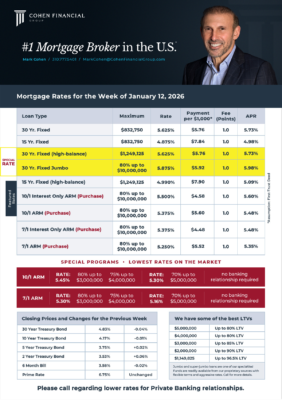
Mortgage Rates for the week of 01-12-2026