
Buying a home in Los Angeles isn’t just more expensive — it’s structurally different. Many homebuyers discover quickly that applying for a mortgage in Los Angeles involves stricter underwriting, higher loan amounts, and more nuanced income evaluation than in nearly any other U.S. market.
At Cohen Financial Group, our Los Angeles mortgage brokers work daily with clients who qualify easily elsewhere yet find unexpected hurdles here. The reason? LA’s high property values, complex borrower profiles, and unique housing stock all combine to create a lending environment unlike any other.
Understanding how Los Angeles mortgages actually work before you apply can prevent costly delays, failed transactions, and missed opportunities in a competitive market.
Before you get into loan specifics, it helps to know your number. See our guide on how much house you can afford in Los Angeles.

Why Mortgage Lending Works Differently in Los Angeles
Three factors shape almost every mortgage transaction in Los Angeles County:
- Extremely high property values
- Diverse, often non-traditional income profiles
- Complex property types and building conditions
Each of these alone affects underwriting. In Los Angeles, they often appear together — requiring more personalized loan strategies and experienced local guidance.
Higher Home Prices Push Buyers Into Jumbo Loans
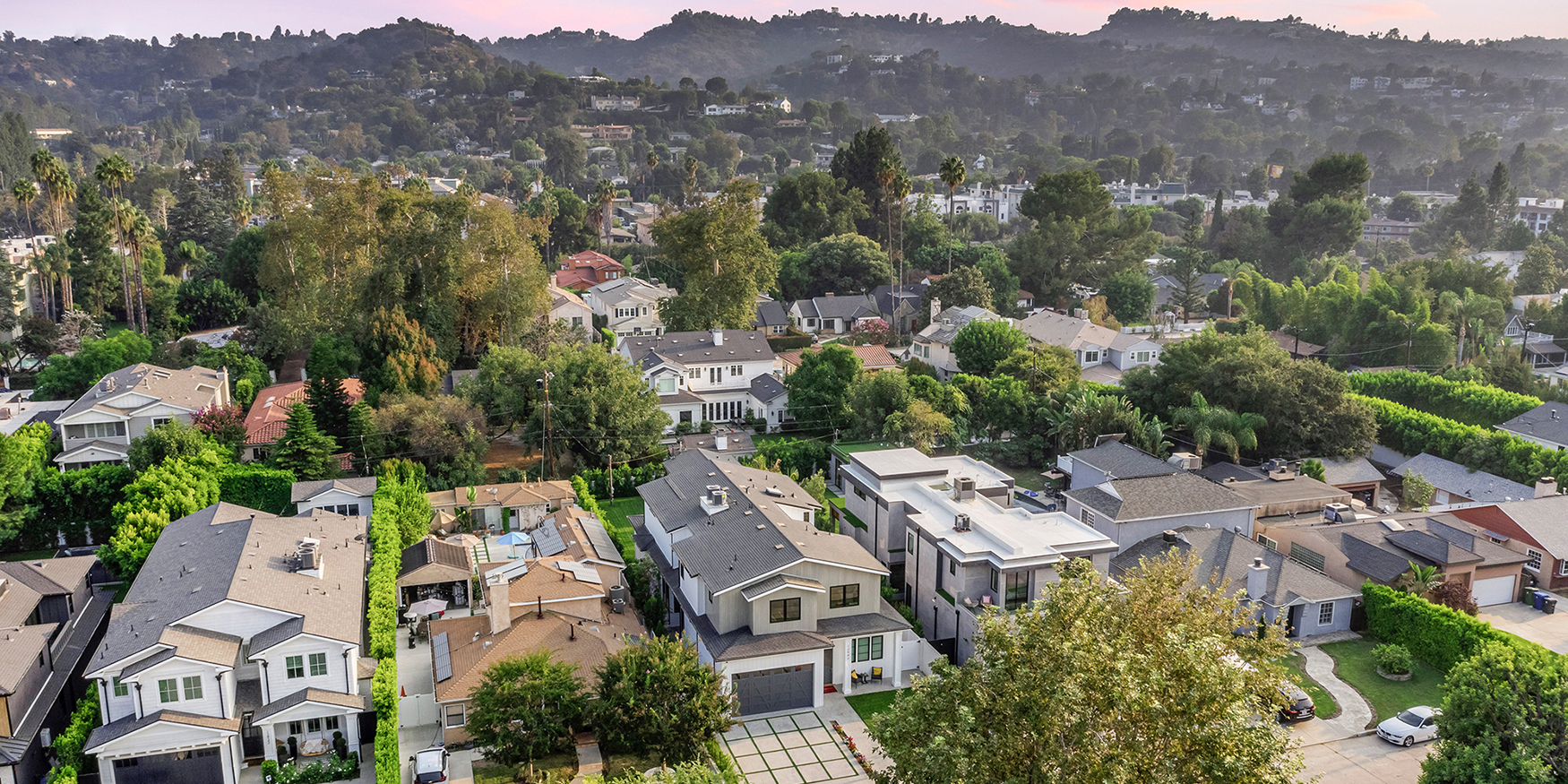
In many Los Angeles neighborhoods, from Beverly Hills and Santa Monica to Pasadena and Manhattan Beach — even modest single-family homes exceed conforming loan limits. That pushes buyers into jumbo loan territory much faster than in other markets.
Once your loan is classified as jumbo, underwriting standards change:
- Reserve requirements increase
- Income is reviewed more conservatively
- Asset documentation becomes stricter
- Credit depth matters more than score alone
In LA’s fast-moving real estate market, jumbo mortgage structure matters as much as the rate itself.
Learn more → Jumbo Loan Programs
Complex Income Is the Norm in Los Angeles
Many Los Angeles borrowers earn income that doesn’t fit a traditional W‑2 model. We regularly help clients who receive:
- Self-employment or business income
- Bonuses, commissions, or fluctuating compensation
- Stock options, RSUs, or K‑1 distributions
- Multiple income streams across entities
Big national banks often underwrite as if every borrower has one steady paycheck, which leads to unnecessary denials or delays. Here, complex income is standard and mortgage strategies must reflect that reality.
Read next → Non-QM and Self-Employed Loan Options

Unique Property Types Require Extra Attention
Los Angeles offers one of the most diverse housing markets in the country — hillside homes, mixed-use properties, condos in creative zones, and more. Lenders treat each type differently, and small details can slow down the approval process.
Common issues that trigger underwriting scrutiny include:
- Condo projects with high investor ownership
- Older buildings with deferred maintenance
- Hillside homes with grading or retaining wall risk
- Mixed-use or non-standard zoning
A property that looks perfect to a buyer can raise unexpected lender conditions if the loan isn’t structured properly from the start.
For details on condo lending guidelines, see Fannie Mae’s Condo Eligibility Guide.
Why National Banks Often Struggle With Los Angeles Loans
Large banks are designed for uniformity — Los Angeles real estate is not.
Their loan officers often face:
- Limited loan product menus
- Rigid underwriting overlays
- Few escalation paths for unique scenarios
- Slower internal approval timelines
In LA’s competitive marketplace, even a short delay can cost a buyer their dream home. That’s why many turn to local mortgage experts who can tailor the structure, product, and timeline from day one.
How Local Mortgage Brokers Offer More Flexibility
Mortgage brokers in Los Angeles have access to multiple lenders and private capital sources. Rather than forcing a borrower into one institution’s model, brokers match each scenario to the best available program.
This flexibility helps when:
- Loan amounts exceed conforming limits
- Income documents are non-traditional
- Assets are distributed across entities
- Timing is critical for an accepted offer
According to the Consumer Financial Protection Bureau, mortgage brokers can offer access to a broader set of loan products — a key advantage for complex Los Angeles borrowers.
Learn what a mortgage broker does.
For a full side-by-side comparison, see Mortgage Broker vs. Bank LA: Which Is the Smarter Choice?
If you are using ChatGPT to build a shortlist of brokers, read Should You Use ChatGPT to Find a Mortgage Broker? Pros and Cons before you contact anyone.
The Los Angeles Mortgage Process, Step by Step
Most Los Angeles buyers encounter these complexities only after submitting a loan application, when leverage and time are already limited. Understanding the process upfront lets you choose the right loan structure early, avoid redundant documentation cycles, strengthen your offer with clear financing terms, and reduce the risk of last-minute surprises. In Los Angeles, preparation is often the difference between a smooth closing and a deal that collapses in escrow.
Step 1: Get Pre-Approved Before You Shop
A pre-approval is a lender’s conditional review of your income, assets, credit, and debt, and it should come before you tour homes, not after you find one. In a competitive Los Angeles market, sellers routinely disregard offers that aren’t backed by a strong pre-approval letter. According to Experian, pre-approval can take as little as a day or two once your documentation is in, though complex income or asset profiles can extend that. A pre-approval is different from pre-qualification, which relies on self-reported information and carries far less weight with sellers and listing agents.
Step 2: Gather Your Documentation
Lenders in Los Angeles typically ask for:
- 2 years of W-2s or federal tax returns (business returns and K-1s if you’re self-employed or have entity income)
- 30 to 60 days of recent pay stubs
- 2 to 3 months of bank and asset statements for every account you’ll draw from
- Government-issued ID
- A gift letter and sourcing documentation if any part of your down payment is a gift
Borrowers with the complex income profiles common here (bonuses, RSUs, K-1 distributions, multiple entities) should expect an additional layer of documentation and plan for it before they’re under contract. See our full breakdown of non-QM and self-employed loan options if a significant share of your income falls outside a standard W-2.
Step 3: Know Your Timeline
According to ICE Mortgage Technology, the average purchase loan closed in just under 37 days as of March 2026, the fastest pace on record since ICE began tracking the metric in 2019. Jumbo and non-QM loans often run toward the longer end of that range, or beyond it, because of the added underwriting scrutiny discussed above. Confirming your expected timeline with your lender before you write an offer protects you from a financing contingency that expires before your loan is ready to fund.
Step 4: Budget for Closing Costs
Beyond your down payment, plan on closing costs of roughly 2% to 5% of your loan amount in California, covering lender fees, title and escrow charges, prepaid property tax and insurance, and recording fees. Jumbo loans and higher price points tend to land toward the higher end of that range. Ask for a written Loan Estimate early so you can budget against real numbers rather than an estimate.
Whichever lender you choose, come prepared with the right questions. See our list of questions to ask a mortgage lender in Los Angeles.
Special Buying Scenarios
Not every purchase follows the standard path above. Two scenarios come up often enough in Los Angeles that they’re worth planning for separately.
Buying a Second Home
Second home and vacation property financing in Los Angeles carries its own occupancy, reserve, and down payment requirements. See our guide to 2026 LA second home mortgage requirements.
Buying Before You Sell
If your next home depends on selling your current one first, a bridge loan can let you make a stronger, non-contingent offer. See Bridge Loan Los Angeles: Buy Before Selling.
Frequently Asked Questions About Los Angeles Mortgages
Why is getting a mortgage harder in Los Angeles?
High home prices, complex income structures, and diverse property types create more lender scrutiny than most other U.S. markets.
Do most Los Angeles buyers need a jumbo loan?
Many do — conforming limits are quickly exceeded in most neighborhoods. The right loan type depends on purchase price, down payment, and borrower profile.
Are mortgage rates higher in Los Angeles?
Rates depend on loan size, program, and risk profile. Working with a broker can help compare multiple lenders for the best pricing.
Are condos harder to finance in LA?
Sometimes. Factors like HOA finances, owner-occupancy ratios, and project approval status all matter in underwriting.
Is it better to use a mortgage broker or a bank?
For complex or high-value homes, brokers typically offer more flexibility, faster turn times, and a broader loan menu than large banks.
Speak With a Los Angeles Mortgage Expert
Los Angeles lending isn’t about checking boxes, it’s about structuring loans that reflect how people actually earn, buy, and invest here.
With over 30 years of mortgage experience across Los Angeles County, Mark Cohen and the team at Cohen Financial Group specializes in jumbo loans, complex income analysis, and high-value property transactions.
If you’re planning to buy or refinance in 2026, speak with Mark Cohen, the top mortgage broker in Los Angeles who understands this market and can tailor a financing strategy that closes smoothly.