



Fed Meeting Leaves Rates Steady
The Fed meeting on Wednesday revealed no unexpected news, and its impact on mortgage markets was minor. Inflation data delayed a bit by the government shutdown far exceeded expectations, but it also caused little reaction. As a result, mortgage rates ended the week nearly unchanged.
Fed Signals Balanced Outlook
After reducing the federal funds rate by 25 basis points at each of the last three meetings, the Fed held it steady at a range of 3.50% to 3.75% as expected. There were no significant surprises in the meeting statement, which contained a small improvement in the outlook for economic growth. It also noted a more even balance of risks between their mandates of low unemployment and stable inflation. The statement from the prior meeting described potential labor market weakness as the greater threat. Investors anticipate that the next federal funds rate cut will take place in June. In addition, President Trump on Friday nominated Kevin Warsh to succeed Jerome Powell as Fed Chair when his term ends in May.
Producer Inflation Surges
An inflation indicator released this week, which measures wholesale costs for producers, came in far above the expected levels. The December core Producer Price Index (PPI) jumped 0.7% from November, well above the consensus forecast of just 0.3% and the largest monthly increase since July. Core PPI was 3.3% higher than a year ago, up sharply from an annual rate of 3.0% last month and also the highest level since July. Core PPI remains well above the 2.0% target level of the Fed. However, the reaction was minor since investors tend to place a lot more weight each month on the Consumer Price Index report, which better reflects overall inflation levels in the economy.
Consumer Confidence Hits Decade Low
The latest confidence survey published by the Conference Board revealed that consumers remain worried about the economic outlook, the labor market, and geopolitical tensions. In January, the index unexpectedly dropped to just 84.5, far below the consensus forecast of 90.0, and the lowest level since 2014.
Labor Market Outlook Worsens
Of note, the decline was widely spread across ages and income groups. In particular, the outlook for future labor market conditions weakened. The number of people who feel that jobs are difficult to find rose to the highest level since February 2021 during the pandemic.
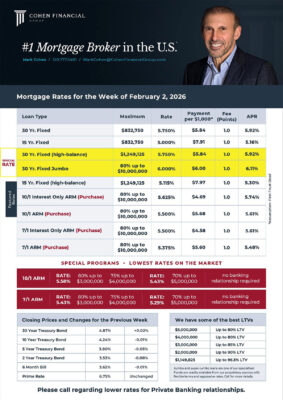

Mortgage Rates for the week of 2-2-2026